This International Women in STEM day, I reflect on the question: What does it mean to be a woman in STEM?
Being a woman in STEM is often described in terms of representation, barriers, and progress. But at its core, it is about access – who knows opportunities exist, who feels able to pursue them, and who is supported once they do.
It also means existing within spaces that were not always designed with you in mind. STEM has historically been structured around particular educational routes, social networks, and expectations about who “belongs.” For many women, entry into these fields involves not just academic achievement, but navigation – learning how to move through institutions, funding systems, and professional cultures that can feel opaque or exclusionary.
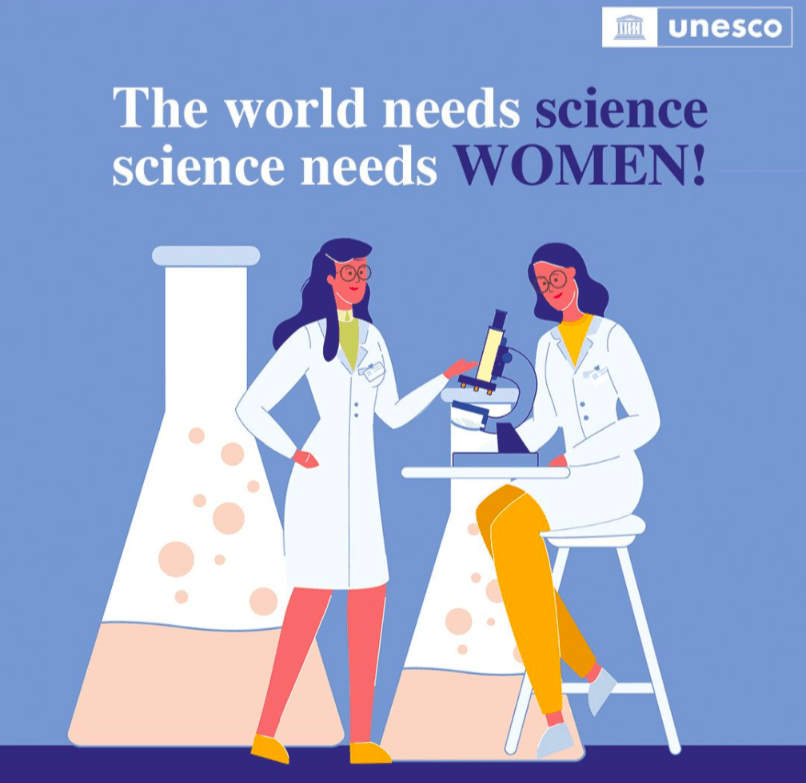
Globally, women make up only 1 in 3 researchers, highlighting the persistence of structural inequality across the sector (UNESCO). Representation alone does not capture the full experience; participation, progression, recognition, and leadership remain uneven.
I am currently a PhD candidate working across Medical Sociology and Public Health. I come from a low socioeconomic background and much of my progression has depended on externally funded schemes and studentships that I actively sought out myself. In 2017/18 I received a Nuffield Foundation studentship, spending a summer in Biomedical Science at Nottingham Trent University. During my undergraduate degree I applied for a summer placement at the Francis Crick Institute. I later completed a Masters in Genomic Medicine at the University of Cambridge with support from the Cambridge Trust, and I am now funded through a Wellcome Trust DTP. None of these opportunities were directly promoted to me through school or university pathways. I found them independently, often by chance, and pursued them persistently.
That experience shaped my understanding of what it means to be a woman in STEM: ability and ambition are not the primary barriers – awareness, access, and confidence often are. Being a woman in STEM can mean carrying an additional layer of labour. It can mean proving credibility more frequently, navigating assumptions about competence, or balancing expectations around caregiving, leadership, and productivity. It can also mean being the first person someone like you has seen in that role – and understanding the visibility that comes with that. But it also means community, mentorship, and collective progress.
Women in STEM create networks of support, share information about funding and career pathways, and make informal knowledge more accessible. Much of the progress in participation has come not only from institutional change, but from women making routes visible for one another. Many women, particularly those from underrepresented backgrounds are not excluded by lack of talent but by lack of visibility. They may not know these schemes exist, where to look, or how to position themselves as candidates. The system frequently rewards those already close to it.
International Women and Girls in Science Day is therefore not only about celebrating women already in laboratories, clinics, and research posts. It is about widening the pipeline. It is about making pathways visible, sharing knowledge openly, and recognising that mentorship, funding, and encouragement can alter trajectories.
But widening access should not rest on the shoulders of women already in these spaces. The responsibility sits with the structural systems designed to support participation: schools that introduce STEM pathways early and equitably, universities that actively signpost funding and opportunities, and institutions that recognise talent beyond traditional networks. Access should be built into the system, not dependent on individual persistence or chance discovery.
Being a woman in STEM means holding two realities at once: contributing to discovery, innovation, and public good, while also reshaping who gets to participate in that work. It is both a professional identity and a structural position -one that continues to evolve as more women enter, remain, and lead within these fields. And, increasingly, it means ensuring that the next generation does not have to rely on chance encounters with opportunity, but can see clearly where pathways exist and how to access them.
 Merissa Elizabeth Hickman
Leave a comment